On the line, drift isn’t an option.
งวดเวลาบนสายการผลิตไม่อนุญาตให้เกิดการลัดวงจร
A wafer’s thermal budget through lithography and photoresist processing is measured in seconds and degrees. The catalyst layer on a fuel cell stack is just as unforgiving—thin, sensitive, and unwilling to tolerate uneven drying. When the lamp underperforms, you know it right away: edge bead, poor adhesion, solvent carryover, and particles that turn into defects after develop. In a high-volume fab, that’s scrap, rework, and unplanned downtime.
งวดเวลาความร้อนของแผ่นเวเฟอร์ในกระบวนการลิโทกราฟีและการเคลือบโฟโตรีซิสต์ถูกวัดในหน่วยวินาทีและองศา ชั้นตัวเร่งปฏิกิริยาบนชุดเซลล์เชื้อเพลิงมีข้อจำกัดเหมือนกัน คือบางมาก บอบบาง และไม่ยอมรับการแห้งที่ไม่สม่ำเสมอ หากโคมไฟทำงานต่ำกว่ามาตรฐาน อาการจะเห็นได้ชัดเจน เช่น ขอบฟิล์มหนาเกิน, การยึดเกาะไม่ดี, สารละลายตกค้าง และฝุ่นละอองที่กลายเป็นตำหนิหลังการล้าง ในโรงงานที่มีการผลิตจำนวนมาก นั่นคือของเสีย งานแก้ไข และเวลาหยุดทำงานที่ไม่คาดคิด
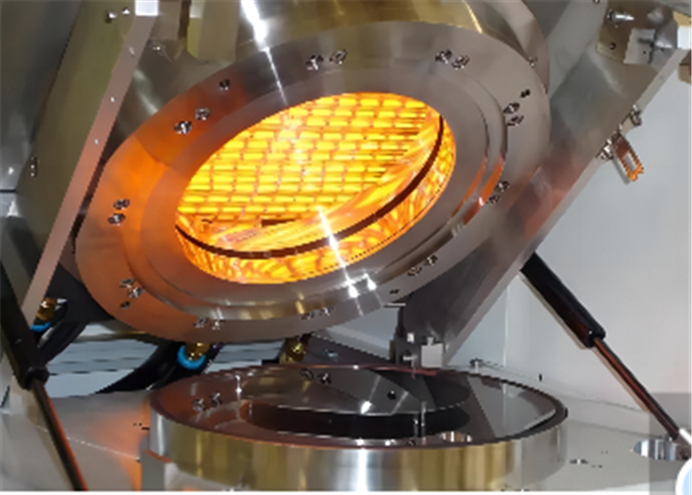
We built this fuel cell catalyst drying lamp for the realities of semiconductor production—where cleanroom discipline and thermal repeatability have to work together. It’s a near-infrared (NIR) drying solution designed to run in Class 1–100 environments, with temperature control that behaves like a process spec, not a hope.
เราออกแบบโคมไฟสำหรับการอบตัวเร่งปฏิกิริยาของเซลล์เชื้อเพลิงนี้ให้ตอบโจทย์การผลิตเซมิคอนดักเตอร์จริงจัง ที่ซึ่งระเบียบการทำความสะอาดในห้องปลอดฝุ่นและความสามารถในการทำซ้ำของอุณหภูมิต้องทำงานร่วมกันได้อย่างแม่นยำ เป็นระบบอบด้วยแสงใกล้อินฟราเรด (NIR) ที่ออกแบบมาเพื่อใช้งานในสภาพแวดล้อม Class 1–100 พร้อมการควบคุมอุณหภูมิที่เป็นไปตามข้อกำหนดกระบวนการ ไม่ใช่แค่ความหวัง
What matters under the hood
ปัจจัยสำคัญภายในระบบ
The core is a short-wave NIR emitter tuned for fast, controlled solvent removal. NIR energy gets absorbed directly into the material, not the substrate, so you keep thermal load off the carrier and still hit fast cycle times without overshoot.
แกนหลักคือเครื่องปล่อยแสง NIR คลื่นสั้นที่ปรับแต่งเพื่อการกำจัดสารละลายอย่างรวดเร็วและควบคุมได้ พลังงาน NIR ถูกดูดซึมเข้าสู่วัสดุโดยตรง ไม่ใช่ฐานรองรับ จึงลดภาระความร้อนกับตัวพาและยังคงรักษาเวลาวงจรที่รวดเร็วโดยไม่มีการเกินเป้า
Here’s the engineering that carries the load:
นี่คือการออกแบบวิศวกรรมที่รับภาระงานนี้
-
Wafer-level thermal uniformity: ±0.1°C across the illuminated zone. That isn’t a marketing line. It comes from a closed-loop, sensor-driven control strategy that holds setpoint during soft bake and hard bake, reducing line-width variation and keeping photoresist profiles consistent.
-
ความสม่ำเสมอของอุณหภูมิในระดับแผ่นเวเฟอร์: ±0.1°C ในโซนที่ส่องสว่าง นี่ไม่ใช่คำโฆษณา แต่เกิดจากกลยุทธ์ควบคุมแบบปิดวงจรที่ใช้เซ็นเซอร์เป็นตัวขับเคลื่อน รักษาจุดตั้งค่าในช่วงอบแบบนุ่มและแบบแข็ง ลดความแปรปรวนของความกว้างเส้นและรักษารูปทรงโฟโตรีซิสต์ให้คงที่
-
Zero particle generation: The lamp assembly uses quartz optics and a cleanroom-compatible architecture—no exposed filaments, no outgassing polymers in the hot zone. In practice, particle counts stay stable over long runs, with no spikes after lamp events.
-
ไม่มีการสร้างฝุ่นละออง: โคมไฟประกอบด้วยออปติกส์ควอตซ์และโครงสร้างที่เหมาะกับห้องปลอดฝุ่น ไม่มีไส้หลอดที่เปิดเผย ไม่มีโพลิเมอร์ที่ปล่อยก๊าซในโซนร้อน ในการใช้งานจริง การนับฝุ่นละอองคงที่ตลอดเวลาการทำงาน ไม่มีการเพิ่มขึ้นหลังจากเหตุการณ์โคมไฟ
-
24/7 reliability with zero unplanned downtime: The emitter and driver are rated for continuous operation. Field data shows 5,000+ hours of stable output, with less than 5% intensity drop over that period. MTBF is specified for multi-shift operation, and the modular design allows quick swaps during scheduled maintenance.
-
ความน่าเชื่อถือ 24/7 ไม่มีเวลาหยุดทำงานโดยไม่คาดคิด: เครื่องปล่อยแสงและไดรเวอร์ได้รับการประเมินสำหรับการทำงานต่อเนื่อง ข้อมูลภาคสนามแสดงผลลัพธ์เสถียรกว่า 5,000 ชั่วโมง โดยมีการลดความเข้มแสงต่ำกว่า 5% ในช่วงเวลานั้น ค่า MTBF กำหนดสำหรับการทำงานหลายกะ และการออกแบบแบบโมดูลาร์ช่วยให้เปลี่ยนชิ้นส่วนได้รวดเร็วในระหว่างการบำรุงรักษาตามกำหนด
-
Process repeatability: Setpoint repeatability of ±0.5°C from run to run, plus fast thermal response. That matters when you qualify a process and then transfer it across multiple tools. Monday looks like Friday.
-
ความสามารถในการทำซ้ำของกระบวนการ: ความสามารถในการทำซ้ำจุดตั้งค่าที่ ±0.5°C จากรอบหนึ่งไปยังรอบถัดไป พร้อมการตอบสนองความร้อนที่รวดเร็ว สิ่งนี้สำคัญเมื่อคุณต้องทดสอบกระบวนการและถ่ายโอนไปยังเครื่องมือหลายตัว วันจันทร์จะเหมือนวันศุกร์
-
Cleanroom fit: Built for Class 1–100 compatibility, with sealed housings, low-outgassing materials, and EMC-compliant cabling. It integrates into existing wet benches and drying stations without fighting airflow or contamination control.
-
ความเหมาะสมกับห้องปลอดฝุ่น: ออกแบบให้เข้ากับ Class 1–100 โดยใช้โครงปิดผนึก วัสดุปล่อยก๊าซต่ำ และสายเคเบิลที่ผ่านมาตรฐาน EMC รวมเข้ากับโต๊ะเปียกและสถานีอบแห้งที่มีอยู่โดยไม่รบกวนการไหลของอากาศหรือการควบคุมมลพิษ
-
Energy and footprint: High power density in a compact package means rapid ramp-up, while energy draw stays aligned with fab sustainability targets. Less warm-up time. Lower standby consumption.
-
พลังงานและขนาด: ความหนาแน่นพลังงานสูงในขนาดกะทัดรัดหมายถึงการเร่งความร้อนอย่างรวดเร็ว ในขณะที่การใช้พลังงานยังสอดคล้องกับเป้าหมายความยั่งยืนของโรงงาน ใช้เวลารออุ่นเครื่องน้อยลง และการใช้พลังงานขณะสแตนด์บายต่ำ
Why this works where you need it
เหตุผลที่ระบบนี้เหมาะสมกับการใช้งานของคุณ
Fuel cell catalyst drying isn’t some abstract thermal step. It’s controlled solvent removal from a thin catalyst ink or paste, and the constraints are the same as in semiconductor work: uniformity, cleanliness, and repeatability.
การอบตัวเร่งปฏิกิริยาของเซลล์เชื้อเพลิงไม่ใช่ขั้นตอนความร้อนที่เป็นนามธรรม แต่มันคือการกำจัดสารละลายอย่างควบคุมจากหมึกหรือพาสต้าตัวเร่งที่บาง และข้อจำกัดเหมือนกับงานเซมิคอนดักเตอร์ คือ ความสม่ำเสมอ ความสะอาด และความสามารถในการทำซ้ำ
In lithography, the bake steps are where thermal uniformity makes or breaks yield. Soft bake sets film quality; hard bake locks the profile before etch or plating. If the thermal profile varies across the wafer, you get thickness variation, poor CD control, and edge defects. Packaging has similar thermal steps—underfill cure, encapsulant drying—where temperature control directly affects voiding and adhesion.
ในกระบวนการลิโทกราฟี ขั้นตอนอบเป็นจุดที่ความสม่ำเสมอของอุณหภูมิมีผลต่ออัตราผลผลิตอย่างชัดเจน อบแบบนุ่มกำหนดคุณภาพฟิล์ม และอบแบบแข็งล็อกรูปทรงก่อนการกัดหรือชุบ หากโปรไฟล์ความร้อนเปลี่ยนแปลงในแผ่นเวเฟอร์ จะเกิดความแปรปรวนของความหนา การควบคุม CD ที่แย่ และตำหนิที่ขอบ การบรรจุชิ้นส่วนมีขั้นตอนความร้อนคล้ายกัน เช่น การบ่มภายใต้ฟิล์มรองและการอบสารห่อหุ้ม ที่ซึ่งการควบคุมอุณหภูมิส่งผลโดยตรงต่อการเกิดโพรงและการยึดเกาะ
This lamp was designed to meet those constraints head on.
โคมไฟนี้ถูกออกแบบมาเพื่อตอบโจทย์ข้อจำกัดเหล่านั้นโดยตรง
-
Photoresist processing: The ±0.1°C uniformity reduces thermal-induced non-uniformity in photoresist, supporting tighter CD control and fewer rework lots. Fast response enables precise time-temperature recipes for soft bake and hard bake, with less thermal lag between stages.
-
การประมวลผลโฟโตรีซิสต์: ความสม่ำเสมอ ±0.1°C ลดความไม่สม่ำเสมอที่เกิดจากอุณหภูมิในโฟโตรีซิสต์ ช่วยให้ควบคุม CD ได้แม่นยำขึ้นและลดจำนวนงานแก้ไข การตอบสนองรวดเร็วช่วยให้กำหนดสูตรเวลา-อุณหภูมิสำหรับอบแบบนุ่มและแบบแข็งได้อย่างแม่นยำ โดยมีความหน่วงของความร้อนระหว่างขั้นตอนน้อย
-
Wafer cleaning and drying: After cleaning, residual moisture and solvents have to come off without adding contamination. The lamp dries quickly and cleanly—zero particle generation, no residue—so carryover into subsequent steps drops and defect rates stay stable.
-
การทำความสะอาดและอบแห้งแผ่นเวเฟอร์: หลังจากทำความสะอาด ความชื้นและสารละลายตกค้างต้องถูกกำจัดโดยไม่เพิ่มมลพิษ โคมไฟอบแห้งได้รวดเร็วและสะอาด ไม่มีการสร้างฝุ่นไม่มีคราบตกค้าง ทำให้การตกค้างในขั้นตอนถัดไปลดลงและอัตราตำหนิยังคงเสถียร
-
Semiconductor packaging: Advanced packaging lines need drying and curing cycles that are repeatable across packages and substrates. The lamp’s repeatability and clean operation support consistent voiding performance and bond line control.
-
การบรรจุเซมิคอนดักเตอร์: สายการผลิตบรรจุภัณฑ์ขั้นสูงต้องการวงจรอบแห้งและบ่มที่สามารถทำซ้ำได้ในทุกแพ็กเกจและฐานรอง โคมไฟมีความสามารถในการทำซ้ำและการทำงานที่สะอาด ช่วยสนับสนุนประสิทธิภาพการเกิดโพรงและการควบคุมเส้นยึดเกาะที่สม่ำเสมอ
-
Fuel cell catalyst drying: The NIR spectrum is tuned to drive solvent out of the catalyst layer without scorching or cracking. The result is a uniform catalyst structure with consistent porosity and adhesion—critical for cell performance and longevity.
-
การอบตัวเร่งปฏิกิริยาของเซลล์เชื้อเพลิง: สเปกตรัม NIR ถูกปรับแต่งให้ขับสารละลายออกจากชั้นตัวเร่งโดยไม่ทำให้เกิดการไหม้หรือรอยแตก ผลลัพธ์คือโครงสร้างตัวเร่งที่สม่ำเสมอ มีความพรุนและการยึดเกาะคงที่ ซึ่งสำคัญต่อประสิทธิภาพและอายุการใช้งานของเซลล์
What you get in day-to-day operation:
ผลลัพธ์ที่ได้รับในการดำเนินงานประจำวัน
-
Shorter cycle time: Fast ramp-up and targeted energy delivery shorten drying and bake steps without raising defect risk.
-
เวลาวงจรสั้นลง: การเร่งความร้อนอย่างรวดเร็วและการส่งพลังงานที่แม่นยำช่วยลดเวลาขั้นตอนอบแห้งและอบฟิล์มโดยไม่เพิ่มความเสี่ยงตำหนิ
-
Higher yield: Tight thermal uniformity and zero particle generation keep defect counts low from lithography through packaging.
-
อัตราผลผลิตสูงขึ้น: ความสม่ำเสมอของอุณหภูมิที่เข้มงวดและไม่มีการสร้างฝุ่นช่วยรักษาจำนวนตำหนิให้ต่ำตั้งแต่ลิโทกราฟีจนถึงการบรรจุ
-
Lower operating cost: Reduced energy consumption and long emitter life cut spares and power overhead.
-
ต้นทุนการดำเนินงานต่ำลง: การใช้พลังงานลดลงและอายุการใช้งานของเครื่องปล่อยแสงที่ยาวนานช่วยลดจำนวนอะไหล่และค่าใช้จ่ายพลังงาน
-
Fewer process excursions: Repeatable performance across shifts and tools makes qualification easier and transfers faster.
-
ความผิดพลาดในกระบวนการลดลง: การทำงานซ้ำได้ในหลายกะและเครื่องมือช่วยให้การรับรองกระบวนการง่ายขึ้นและการถ่ายโอนรวดเร็วขึ้น
The practical details that keep it honest
รายละเอียดเชิงปฏิบัติที่รับประกันความถูกต้อง
This is a production tool, not a lab demo. To hit the performance we’re talking about, treat it like any critical thermal module.
นี่คือเครื่องมือสำหรับการผลิต ไม่ใช่ของสาธิตในห้องทดลอง เพื่อให้ได้ประสิทธิภาพตามที่กล่าวมา ให้ปฏิบัติกับมันเหมือนโมดูลความร้อนที่สำคัญทั่วไป
-
Integration geometry: The lamp head is compact, but mounting and clearance have to match your tool envelope. Confirm optical path alignment and wafer positioning tolerances during integration. We provide CAD footprints and connector pinouts for common platforms.
-
รูปทรงการติดตั้ง: หัวโคมไฟมีขนาดกะทัดรัด แต่การติดตั้งและระยะช่องว่างต้องตรงกับพื้นที่ในเครื่องมือของคุณ ตรวจสอบการจัดแนวทางแสงและความคลาดเคลื่อนตำแหน่งแผ่นเวเฟอร์ในระหว่างการติดตั้ง เรามีไฟล์ CAD และพินเชื่อมต่อสำหรับแพลตฟอร์มทั่วไปให้
-
Thermal coupling: For the best uniformity, the sensor needs a clean view of the work surface with minimal emissivity variation. If your carrier or substrate has variable surface properties, plan for a calibration offset and a fixed measurement point.
-
การเชื่อมต่อความร้อน: เพื่อความสม่ำเสมอที่ดีที่สุด เซ็นเซอร์ต้องมองเห็นพื้นผิวงานอย่างชัดเจนโดยมีความแปรผันของการแผ่รังสีต่ำ หากตัวพาหรือฐานรองมีคุณสมบัติพื้นผิวที่เปลี่ยนแปลง ควรวางแผนการชดเชยการสอบเทียบและกำหนดจุดวัดคงที่
-
Electrical and EMI: The driver is compliant, but in dense tool stacks, EMI management still matters. Keep signal and power routing separated, and ground the assembly per the manual.
-
ระบบไฟฟ้าและ EMI: ไดรเวอร์ผ่านมาตรฐาน แต่ในชุดเครื่องมือที่หนาแน่น การจัดการ EMI ยังคงสำคัญ แยกเส้นสัญญาณและไฟฟ้าให้ออกจากกัน และต่อกราวด์ตามคู่มือ
-
Cleanroom handling: The lamp is cleanroom-ready, but standard contamination control practices still apply. Use clean handling, avoid touching optical surfaces, and stick to the preventive maintenance schedule.
-
การจัดการในห้องปลอดฝุ่น: โคมไฟพร้อมใช้งานในห้องปลอดฝุ่น แต่ยังต้องปฏิบัติตามมาตรฐานควบคุมมลพิษ ใช้วิธีการจัดการที่สะอาด หลีกเลี่ยงการสัมผัสพื้นผิวออปติก และปฏิบัติตามตารางบำรุงรักษาป้องกัน
One real-world trade-off: the NIR source delivers fast, efficient drying, but it’s sensitive to ambient reflections and emissivity differences. In most semiconductor applications, fixture design and calibration handle that. With highly reflective substrates, a small calibration adjustment may be needed to keep uniformity as tight as possible.
ข้อแลกเปลี่ยนในโลกความจริงคือ แหล่ง NIR ให้การอบแห้งที่รวดเร็วและมีประสิทธิภาพ แต่มีความไวต่อการสะท้อนแสงรอบข้างและความแตกต่างของการแผ่รังสี ในแอปพลิเคชันเซมิคอนดักเตอร์ส่วนใหญ่ การออกแบบอุปกรณ์จับยึดและการสอบเทียบจัดการเรื่องนี้ได้ สำหรับฐานรองที่มีความสะท้อนสูง อาจต้องปรับการสอบเทียบเล็กน้อยเพื่อรักษาความสม่ำเสมอให้แน่นที่สุด
If your day is spent running wafers through lithography, cleaning and drying them to spec, and pushing packaging cycles without giving up yield, you need thermal control you can bank on. This fuel cell catalyst drying lamp delivers that control—precise, clean, and repeatable—on the line, every shift.