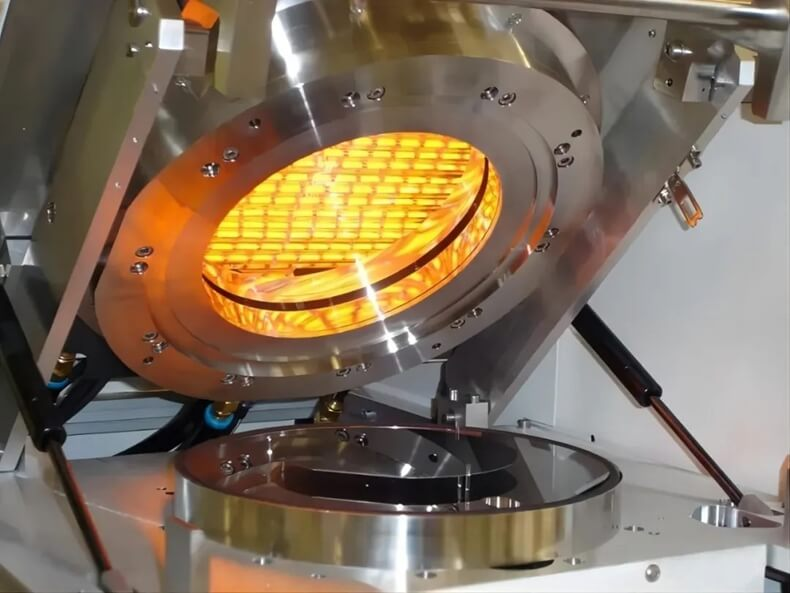
Out on the line, the wafer comes out of the rinse and the clock starts ticking. Any moisture left behind shows up as resist footing, bridging, or a yield hit you simply can’t live with. You need a dry step that clears water fast—without chewing up thermal budget or adding particles. What matters under the hood We built our moisture removal lamp around short-wave infrared in a quartz envelope, with a reflector geometry that puts the heat on the film, not the carrier. That gives you ±0.1°C spatial uniformity across the illuminated zone, so photoresist temperature stays inside the spec window during soft bake and hard bake. Cleanroom compatibility isn’t a talking point: Class 1–100 operation is backed by low-outgassing hardware, sealed joints, and a particle profile that stays flat. Output repeatability holds within 1% shift over thousands of cycles, and the system tracks setpoint with millisecond response to keep critical dimensions stable. Why it plays in lithography In lithography cells, the lamp knocks off surface moisture right before resist coat, so you avoid dewetting and edge bead issues. In bake tracks, it lands the same temperature at the same spot, run after run, so Ttop and Tbottom don’t drift. That kind of consistency shortens qualification, cuts rework, and trims energy use because the lamp heats only the target area. Reliability shows up as uptime: units run 5,000+ hours with less than 5% output drop, and service intervals stretch without pushing risk. Here is what to watch for The lamp works with standard SEMI interfaces, but integration still needs attention to thermal clearance and exhaust routing. The quartz envelope doesn’t forgive mechanical shock, so handling and mounting have to follow the specified torque and alignment. Plan on a cleanroom-rated power and signal harness, and double-check that your process gas and exhaust chemistry line up with the materials list.