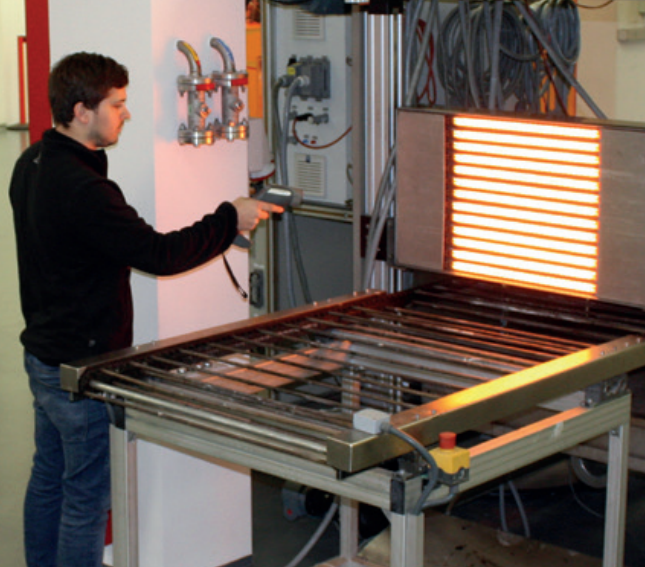
On the fab floor, a 0.5°C drift in the photoresist bake can shift a linewidth by nanometers—and that’s how a whole lot gets scrapped. We built our lithography oven lamp for that reality, using short-wave NIR to deliver rapid, direct-coupled heat that keeps the critical thermal steps stable. What matters, technically The lamp runs in the near-infrared band, so the photoresist absorbs heat efficiently. Ramp time drops, but the substrate stays thermally gentle. Across the chuck, wafer-level uniformity holds ±0.1°C, and repeatability stays nailed down with closed-loop pyrometry right at the process point. Cleanroom compatibility isn’t an afterthought: Class 1–100 compliant materials, zero outgassing, and a particle-averse design keep counts where they need to be. The system runs 24/7 with predictable maintenance windows, so unplanned downtime doesn’t end up on the board. Why it works in practice In wafer drying, the NIR profile pulls off surface moisture without stressing films. During soft bake, solvents evaporate cleanly—better adhesion, less scum. In hard bake and photoresist curing, the thermal budget is controlled precisely, which translates to tighter CD control and fewer reworks. The payoff is consistent yield, shorter cycle times, and lower energy draw per wafer, because the heat goes exactly where it’s needed. Here’s what to keep in mind NIR heats fast, so thermal coupling and chuck condition matter. We supply a matched thermal interface kit, and we recommend quarterly calibration of the pyrometer to keep accuracy tight. The lamp fits standard lithography platforms and cleanroom utilities, but integration needs a dedicated 208–240 V circuit and verified exhaust routing—temperature stability and exhaust balance depend on it. Plan for a short qualification run; it will confirm uniformity maps and process repeatability against your specific resist stack.