
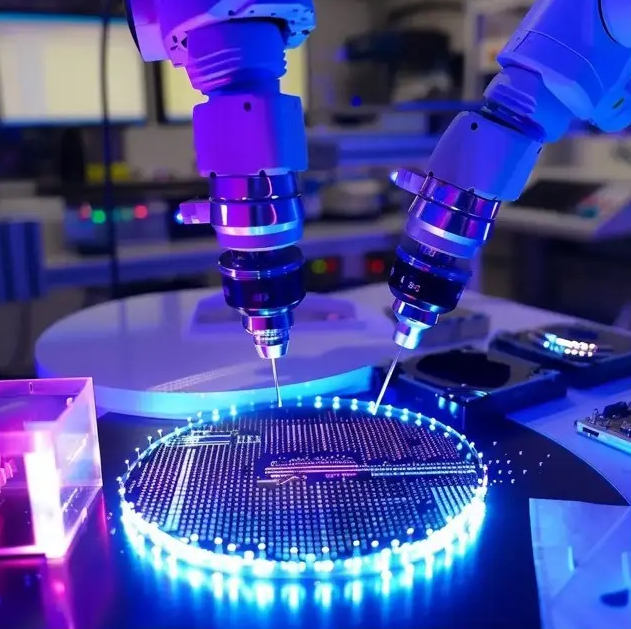
Out on the fab floor, a half-degree drift in bake temperature is enough to send a photoresist profile from on-spec to the scrap bin. Soft bake, hard bake, and wafer drying aren’t just thermal steps—they’re the gatekeepers for linewidth, profile control, and defect count. When the heater starts missing, you pay for it in rework, scrap, and lithography uptime that just vanishes. What actually matters under the hood We run industrial wafer heaters on short-wave infrared—direct energy transfer, sub-second response. Across the hot zone, wafer-level uniformity holds within ±0.1°C, which keeps photoresist flow, solvent removal, and crosslinking from wandering. The hot zone is built for Class 1–100 cleanroom use: low-outgassing materials, and an airflow path designed to keep particles out of the picture. Zero particle generation isn’t a slogan; we measure it at the exhaust and validate against the fab’s particle counters. Repeatability comes from closed-loop control, calibrated sensors, and thermal mass that keeps temperature stable even when batches change. Why this holds up in production In real runs, infrared means faster ramps, a tighter thermal budget, and more predictable critical dimension control. Consistent soft bake cuts solvent-related defects; consistent hard bake improves adhesion and etch resistance. The system runs 24/7 around planned maintenance windows, so you don’t get unplanned downtime that knocks line balance sideways. Energy use drops because IR heats the wafer directly—less wasted heat, less cooldown overhead. The net result is more good wafers per day, less scrap, and fewer heater swaps. A few practical notes Short-wave IR needs line-of-sight to the wafer, so the tool integration geometry matters. The placement window is narrower than with convection heaters, and you’ll want to coordinate early with the tool vendor on clearances, exhaust routing, and shielding. We support standard mechanical and electrical interfaces, but legacy coat tracks often need custom adapters. Specify your cleanroom class and exhaust requirements up front—they drive the sealing strategy and the filter package.