Cleaning Up the Carbon Footprint of Semiconductor Gloveboxes
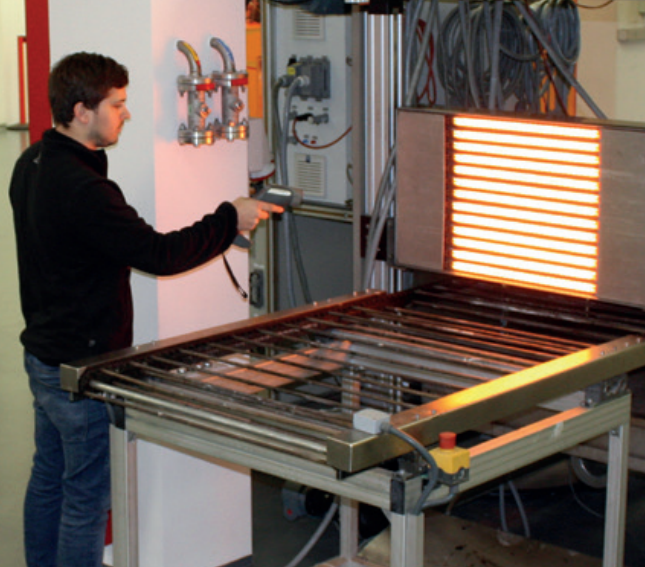
Most gloveboxes in semi-fab plants do things the old-fashioned way: they heat up the entire chamber using convection or resistive heaters. It’s basically like heating your whole house just to warm up a single slice of pizza. It’s a waste of energy, and it’s a drag on the environment. We’ve found a better way. By using short-wave infrared (IR) heaters, we can aim the heat directly at the workpiece. No more warming up the air or the walls—just the part that actually needs it. Stop the “Blanket Heating” If we’re actually going to hit carbon-neutral goals, we have to stop with the blanket approach. Our IR elements are tuned to specific wavelengths that the target material actually drinks in. Since we can dial in the wattage and voltage, the heat hits the substrate and stays there. It doesn’t soak into the glovebox walls. And because the chamber isn’t turning into an oven, your facility’s HVAC and cooling systems don’t have to work nearly as hard to keep things stable. The Nitty-Gritty on Gear We build these things with high-purity quartz and some pretty specific coatings to make sure the energy penetrates the material instead of just bouncing off the surface. The best part? Most of these are designed as drop-in replacements. You can swap out your old resistive arrays without having to redesign your whole setup. We also use high-temp connectors so you don’t have to worry about the terminals burning out. Just a heads-up: be careful when you’re handling the quartz. If you leave fingerprints or oils on the glass, you’ll get hotspots, and the element will fail way sooner than it should.Keep it clean. The Trade-offs Here is the good news: IR is fast. Like, really fast. The ramp-up is almost instant. This means you can actually turn the system off when you’re not using it to save a few bucks on electricity without worrying about a long wait time to get back up to temp. But, there is a catch. IR needs a clear line of sight. If the heater can’t “see” the part, it can’t heat it. If your glovebox has a messy layout or weird geometries, you’ll probably need to angle a few different lamps to kill off any cold spots. Also, make sure your power supply is rock solid. A sudden voltage spike can fry a high-density IR element a lot faster than a standard coil.