Out on the line, the bake steps in photoresist are where yield and cycle time live or die. A few degrees of drift, a hot spot across the wafer, and you’re staring at linewidth variation, scumming, or solvent left behind. What you need is heat that ramps fast, lands exactly, and then holds steady—without adding particles or chasing downtime.
What matters under the hood
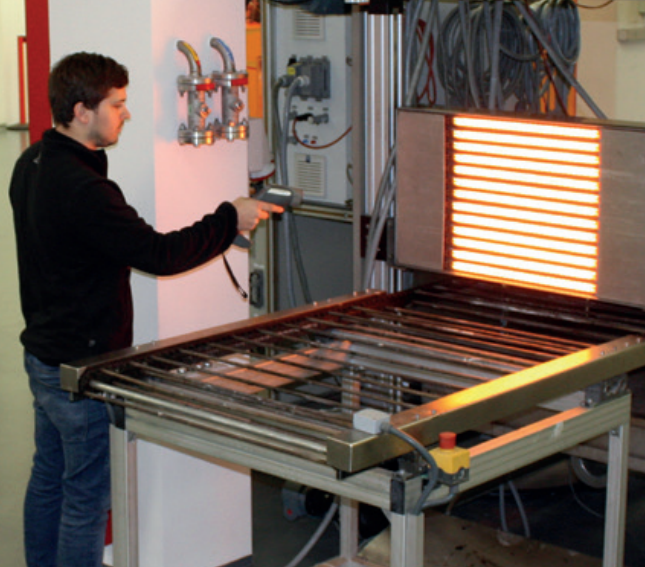
We built our semiconductor infrared heating lamp around short-wave NIR, because it dumps energy straight into the photoresist and substrates without messing around. The system keeps wafer-level uniformity within ±0.1°C and repeatability tight enough to hold thermal budget across lots. Output stays stable over 5,000+ hours with less than 5% drop, so you’re not constantly re-tuning the setpoint between wafers. And it’s cleanroom-compatible from Class 1 to Class 100, with zero particle generation while it’s running.
Why it behaves in lithography tracks
On the track, this lamp gives you the quick ramp and rock-solid hold you need for both soft bake and hard bake, with temperature profiles that line up to resist chemistry and the substrate stack. The response is immediate, so you can cut bake time without overshoot—throughput goes up while CD and yield stay where you want them. Energy use drops, too, because heat only shows up when the process calls for it and stays contained in the process zone. You’ll see fewer replacements, and unplanned stops fall off when thermal control is predictable instead of moody.
The practical details you’ll want to get right
Installation comes down to matching the lamp to your chamber geometry and the tool’s thermal control interface. You’ll get a clear footprint and wiring plan, but confirm alignment tolerances and cooling provisions before you sign off. The lamp hits spec when the reflector path stays clean and the power supply is regulated. In environments with heavy particulate or voltage that wanders, plan routine maintenance and line conditioning—keeps the process window centered where it should be.