Getting Your Thermal Data Right in the Smart Fab
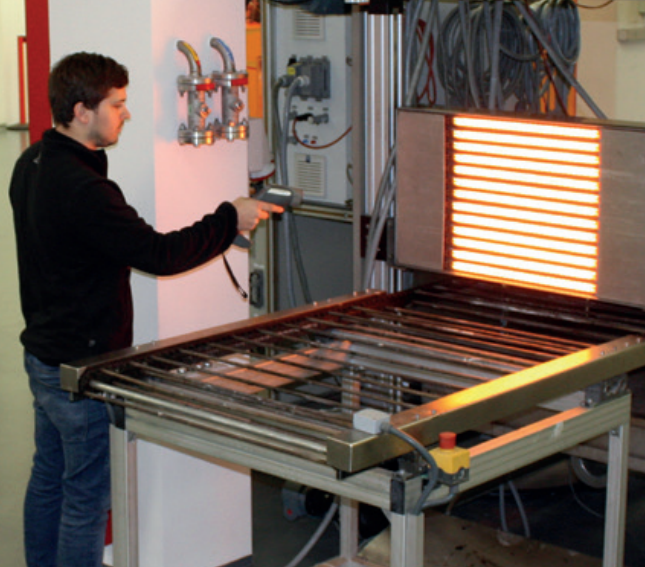
If you’re planning an Industry 4.0 fab, you’ve probably realized that the old way of just “turning up the heat” doesn’t cut it anymore. You need a system that actually tells you what’s happening. We use infrared systems packed with smart sensors to turn raw heat into actual, usable data. It’s not just about getting a part warm. It’s about seeing the entire thermal map of your production line while it’s actually running.
Why we lean on Infrared
Here’s the thing: in a cleanroom or a semiconductor setup, you can’t just go poking things with probes. You’ll contaminate the workpiece, and then you’ve got a real problem on your hands. That’s where IR comes in. It picks up electromagnetic radiation and flips it into a digital signal without ever touching the part. We plug these sensors straight into your PLC or SCADA system, so you can watch temperature swings across the substrate in real-time.
Making the hardware talk back
Digitalization is really just a fancy way of saying your heating system should talk to your controller. When you pair IR emitters with high-precision sensors, you get a feedback loop. If a specific zone drops by 2°C, the system catches it and bumps up the wattage instantly. No more “over-shooting” like you see with those old-school PID controllers. Your thermal profiles just stay tighter.
The gritty reality of the hardware
Now, let’s be honest about the trade-offs. High-density IR systems put out a massive amount of heat. The sensors give you the precision you need, but the hardware itself takes a beating from constant thermal cycling. You have to make sure your cooling manifolds can handle all that ambient heat building up around the sensor housing. If the housing gets too hot, your data starts to drift. It’s frustrating and ruins your accuracy. To stop that, we always suggest active cooling for any sensor sitting within 10cm of a high-wattage lamp. It keeps the calibration honest. At the end of the day, switching to a smart IR setup means way less scrap. You catch those weird thermal anomalies before they ruin a part. You’ve basically turned your heating stage into a source of intelligence.